Noticing Early Writing Difficulties
Raise the Bar Psychology is drawing attention to the growing need for awareness around dysgraphia, a learning difficulty that can affect how children write, organise ideas, and manage written tasks in school. Many families assume writing trouble stems from rushing or a lack of practice, yet dysgraphia often involves challenges with motor coordination, spacing, spelling, and the ability to turn thoughts into written language. These struggles can affect confidence and classroom performance when left unrecognised. By helping parents understand early indicators and encouraging timely evaluation, Raise the Bar Psychology highlights the value of seeking a comprehensive learning assessment Melbourne to better understand a child’s needs. Early support can make the writing process more manageable and help children navigate learning with greater confidence.
Understanding Dysgraphia and Early Learning Challenges
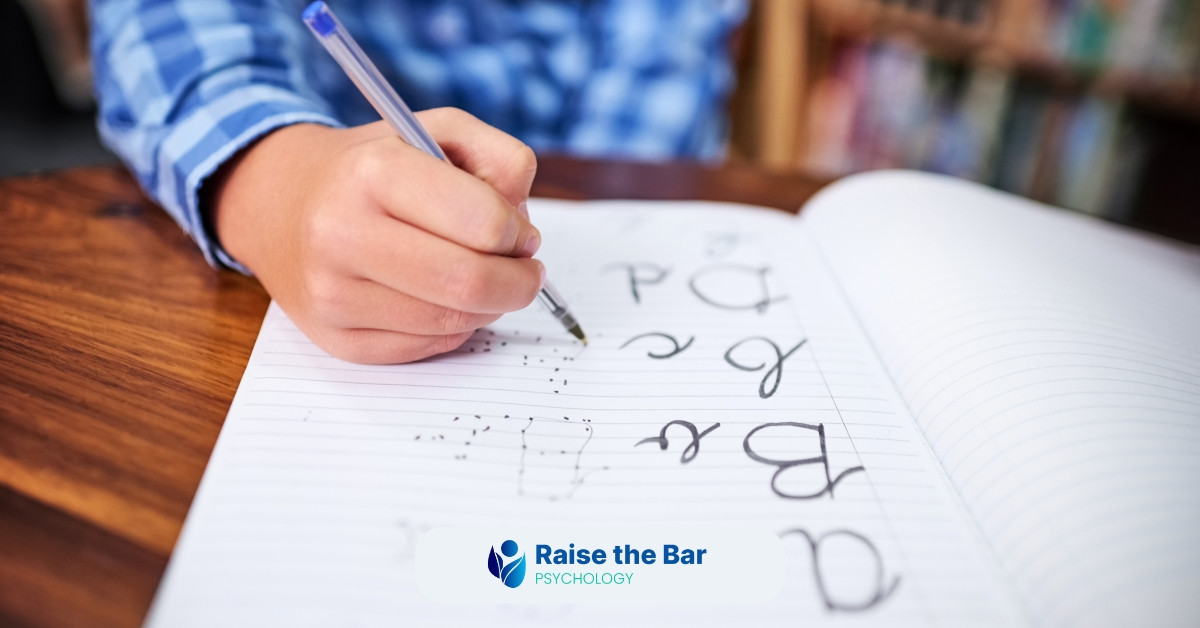
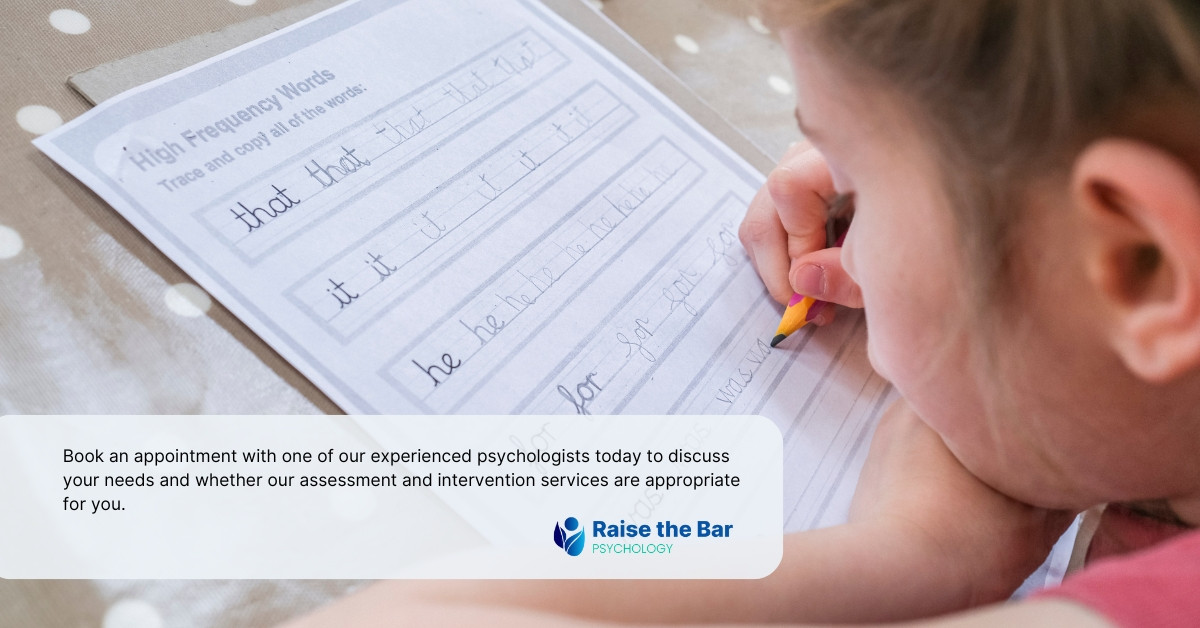
Every parent notices when their child struggles with handwriting. Letters that drift off the lines, words that seem rushed or uneven, it’s easy to assume they just need more practice. But sometimes the issue runs deeper than messy writing.
Dysgraphia is a learning difficulty that affects the ability to write clearly and consistently. It can make tasks like forming letters, spacing words, or even holding a pencil feel frustrating and exhausting. And because it often goes unnoticed, children may start to doubt their abilities or lose confidence in school.
Recognising the signs early can make all the difference. With understanding, patience, and the right support, kids with dysgraphia can find new ways to express their ideas and thrive academically.
It’s not about perfect handwriting; it’s about helping every child find their own way to communicate and succeed.
What is Dysgraphia?
Dysgraphia is a specific learning disability that affects written expression, causing difficulties with writing, spelling, and organising thoughts on paper.
It is a neurological disorder that can impact a person’s ability to form letters, use correct grammar and punctuation, and space words and letters appropriately on a page.
People with dysgraphia often speak more fluently than they write and may require more time and effort for written tasks.
Types of Dysgraphia
The condition is often categorised based on the primary area of difficulty:
- Motor dysgraphia: Related to poor fine motor skills and dexterity. Handwriting is often illegible, but spelling may be typical.
- Spatial dysgraphia: Related to issues with spatial awareness. Difficulties with spacing, writing on lines, and drawing. Spelling is often normal.
- Phonological/linguistic dysgraphia: Related to the connection between how words sound and how they are spelt, or difficulty with language processing. Spelling is often impaired, especially for unfamiliar words.

Key Signs of Dysgraphia That Parents and Educators Should Look For in Children
1) Challenges with the physical act of writing (motor and spatial issues)
These signs relate to the mechanics of putting pen to paper:
- Pain and fatigue: The child complains that writing by hand is painful, causes hand cramps, or they tire quickly even after short writing tasks.
- Unusual pencil grip and posture: They may use an awkward or tight pencil grip (which can lead to the pain above) or exhibit unusual body, wrist, or paper positioning while writing.
- Inconsistent spacing and sizing: Difficulty with spatial planning, leading to:
- Inconsistent spacing between letters, words, or sentences.
- Irregular letter sizes, mixing small and large letters.
- Trouble staying on lines or within margins.
- Slow writing speed: The child writes or copies things much more slowly than their peers, often taking a long time to complete assignments.
- Frequent erasing: Excessive erasing, often an attempt to correct poorly formed letters or spacing.
- Difficulty with letter formation: Persistent trouble forming proper letter shapes or recalling how letters are formed. They might mix cursive and print, or upper- and lower-case letters, randomly.
2) Difficulties with written expression and language processing (cognitive issues)
These signs affect how the child translates thoughts into written language:
- Spelling and grammar issues
- Poor spelling that is inconsistent, even with words they know orally.
- Difficulty with grammar, punctuation, and sentence structure, even when they speak fluently.
- Omitting or adding words, word endings, or using verbs/pronouns incorrectly.
- Poor organisation of ideas: They struggle to organise or articulate their thoughts clearly on paper, often resulting in:
- Incomplete or “run-on” sentences.
- Written work that is hard to follow or doesn’t logically connect ideas, despite having a rich vocabulary and clear ideas when speaking.
- Difficulty with higher-order writing tasks like outlining or structuring an essay.
- Gap between verbal and written skills: They can express themselves clearly and fluently when speaking, and their ideas are often great, but their written work doesn’t reflect their intelligence or knowledge.
- Avoidance and anxiety: The child may avoid or resist writing tasks (including homework), becoming frustrated or anxious when faced with them, because of the physical and cognitive effort required.
If you observe several of these signs consistently, it is advisable to seek a professional evaluation from allied health professionals with expertise in learning disorders, such as psychologists and occupational therapists. Early intervention and support can make a significant difference.
Final Thoughts
While messy handwriting is a visible sign, dysgraphia is a complex learning disability that involves much more than just the physical act of writing neatly. It can affect fine motor skills and the cognitive processes required for written expression.
There is no “cure,” but dysgraphia can be successfully managed with appropriate interventions.
If you suspect you or a child may have dysgraphia, a diagnosis is typically made by specialists, such as a psychologist or occupational therapist, who can recommend targeted support.
Help Kids Gain Confidence Through Clarity
 Melbourne is renowned for its diverse cultural landscape, thriving educational hubs, and family-friendly communities, which are spread across its numerous suburbs. With schools, health services, and community programmes easily accessible, families benefit from a strong support network for children’s learning and development. Raise the Bar Psychology provides learning assessments within Melbourne and nearby suburbs, offering families guidance and clarity when concerns about literacy or writing challenges arise.
To learn more about the signs of dysgraphia and how writing difficulties can affect your child, reach out to Raise the Bar Psychology for guidance and a personalised consultation. Families can access further details about Beyond Messy Handwriting: Recognising Signs of Dysgraphia in Kids and enquire about assessments to better understand a child’s learning needs. Raise the Bar Psychology assists families navigating learning disorders Melbourne, offering clear pathways to support, practical strategies, and improved confidence for children who find writing particularly challenging.