
SIP trunking has emerged as the dominant force in business communications, with market projections reaching $290 billion by 2035.
Cost savings of 25–65% over traditional systems drive widespread adoption across all business sizes.
Instant scalability supports remote workforces and business growth without infrastructure limitations.
Digital transformation initiatives position SIP as essential communication infrastructure.
AI integration and unified communications create competitive advantages through intelligent platforms.
Organizations still relying on legacy phone systems face critical decisions as traditional telecom infrastructure becomes obsolete.
Traditional phone systems, once the backbone of connectivity, are rapidly becoming obsolete as organizations embrace internet-based calling solutions that deliver unprecedented flexibility and cost efficiency. The SIP trunking market is projected to surge from $80 billion in 2025 to $290 billion by 2035, with a compound annual growth rate of 13.75%.
SIP trunking has evolved from an alternative to traditional telephony into the foundation for modern communication strategies. As organizations navigate hybrid work environments, digital transformation initiatives, and evolving customer expectations, SIP trunking provides the scalable, cost-effective infrastructure that growing businesses need to compete effectively without breaking the budget.
Understanding current VoIP trends and why SIP adoption continues accelerating across industries provides insights for business leaders evaluating their communication strategies. Cost pressures, technological capabilities, and workforce evolution have created momentum that positions SIP trunking as essential for tomorrow's successful businesses.
1. Massive Cost Savings Drive Universal SIP Adoption
Financial pressures continue forcing businesses to scrutinize every operational expense, making the cost advantages of SIP trunking impossible to ignore. Organizations switching from traditional phone systems consistently report savings of 25–65% on their communication expenses.
These savings result from eliminating expensive Primary Rate Interface lines, reducing long-distance charges, and optimizing channel utilization. Traditional telephony systems require significant upfront investments in hardware, ongoing maintenance contracts, and costly infrastructure upgrades. SIP trunking transforms these fixed costs into flexible operational expenses that scale with actual usage patterns.
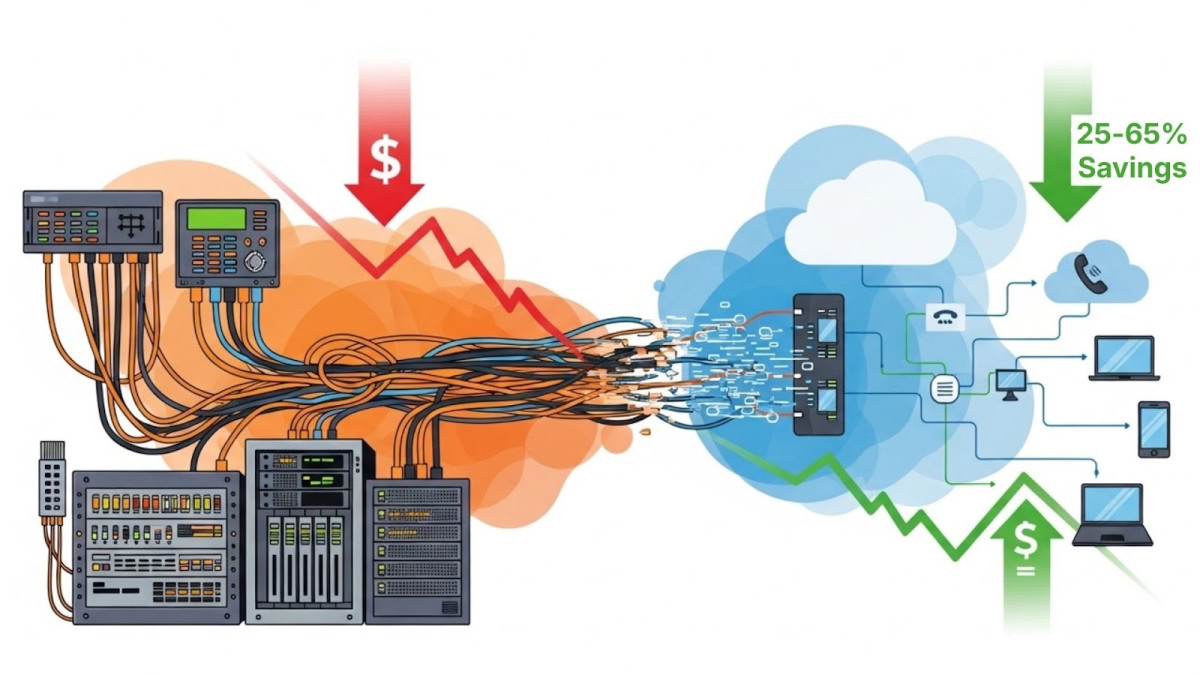
Small and medium enterprises benefit from this cost transformation. Organizations can redirect capital from communication infrastructure toward core business initiatives while gaining enhanced capabilities. These savings compound over time as businesses avoid hardware refresh cycles, maintenance fees, and capacity expansion costs.
The financial advantages extend beyond direct cost reductions. SIP trunking simplifies billing by eliminating multiple phone line charges and reducing administrative headaches. Growing businesses can expand to new locations without the complexity and expense of installing additional phone lines at each site.
Advanced analytics built into modern SIP platforms provide detailed insights into communication patterns and costs, enabling data-driven optimization. Organizations leverage this visibility to identify usage trends, optimize channel allocation, and implement cost controls that ensure ongoing efficiency.
2. Instant Scalability Meets Modern Business Demands
The movement toward remote and hybrid work has exposed limitations in traditional phone systems that SIP trunking addresses. Unlike legacy infrastructure that requires weeks for capacity changes and significant capital investment, SIP trunking enables instant scaling through simple configuration adjustments that take minutes rather than months.
Scalability is invaluable for businesses experiencing rapid growth, seasonal fluctuations, or project-based operations. Organizations can add channels during peak periods and reduce capacity during slower times, ensuring cost-effective resource utilization while maintaining optimal service levels. A growing consulting firm can provision additional capacity for new hires within minutes, while seasonal retailers can temporarily increase calling capacity without long-term commitments.

Opening new locations is simpler with SIP infrastructure. Growing businesses can establish professional phone service at new offices without waiting weeks for phone line installation or dealing with different local carriers. Remote teams and satellite offices get the same professional calling features as headquarters.
Distributed workforces demand solutions that support employees regardless of location. SIP trunking enables full phone functionality on any internet-connected device, maintaining professional presence and communication consistency whether employees work from headquarters, home offices, or client sites. This flexibility is essential for attracting and retaining top talent in competitive employment markets.
3. Digital Transformation Accelerates SIP Adoption
Digital transformation initiatives across industries are restructuring how businesses approach technology infrastructure, with communication systems playing central roles in these modernization efforts. SIP trunking provides the flexible foundation for integrating disparate business applications while supporting emerging technologies.
Small businesses pursuing digital transformation and following emerging VoIP trends need setups that integrate with popular business tools like CRM systems, accounting software, and collaboration platforms. SIP trunking enables these integrations through application programming interfaces and standardized protocols. Sales teams gain automatic call logging, customer service representatives access real-time customer information, and managers receive comprehensive analytics across all communication channels.
Cloud migration strategies include communication infrastructure as organizations seek to eliminate on-premises hardware and simplify IT management. Cloud-based SIP solutions reduce complexity while providing enterprise-grade reliability and security that matches or exceeds traditional systems. IT departments can focus on strategic initiatives rather than maintaining legacy hardware.
Data-driven decision-making is vital for business success, requiring communication platforms that generate actionable insights. Modern SIP implementations provide detailed analytics on call patterns, customer interactions, and operational efficiency that enable continuous improvement. Organizations leverage this data to optimize staffing models, improve customer experience, and identify growth opportunities.
SIP trunking integration includes artificial intelligence, machine learning, and Internet of Things platforms. Businesses can implement intelligent call routing, automated customer service, and predictive analytics. These capabilities position organizations to capitalize on technological advancement without requiring complete infrastructure replacement.
4. Unified Communications Revolutionize Collaboration
The evolution of workplace collaboration has created demand for integrated communication platforms that combine voice, video, messaging, and file sharing into cohesive experiences. SIP trunking serves as the foundation for unified communications solutions that eliminate silos, improve productivity, and reduce complexity.
Traditional business environments relied on separate systems for different communication modes, creating inefficiencies and missed opportunities. Email, phone calls, instant messaging, and video conferencing operated independently, requiring employees to manage multiple platforms and often losing context between interactions. Unified communications platforms built on SIP infrastructure integrate these capabilities into streamlined experiences that enhance collaboration.
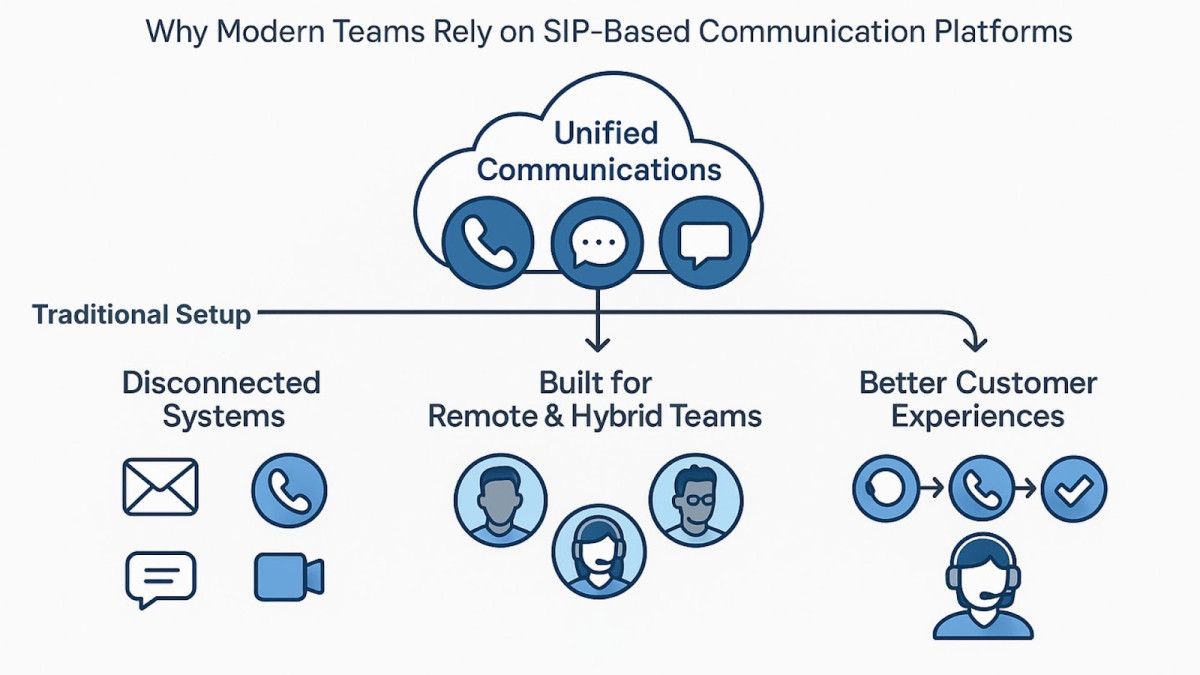
Modern unified communications deliver productivity improvements through presence management, which allows employees to see colleagues' availability before initiating contact. Calendar integration enables seamless scheduling and automatic call routing based on availability. Advanced platforms provide conversation continuity that maintains context as interactions move between channels, ensuring important information doesn't get lost in transitions.
Remote and hybrid work environments benefit from unified communications. Team members can initiate voice calls from chat conversations, escalate to video conferences when needed, and share screens or documents without switching applications. Integration maintains team cohesion and communication effectiveness regardless of geographic distribution.
The business benefits extend to customer service as well. Unified communications help small businesses provide professional customer experiences while keeping track of important conversations. Customer service representatives can seamlessly transfer conversations between channels while preserving context, resulting in improved satisfaction and reduced resolution times.
5. AI Integration Creates Intelligent Communication Platforms
Artificial intelligence is transforming SIP trunking into intelligent communication platforms that optimize operations and enhance customer experiences. Machine learning algorithms analyze patterns to provide insights and automation that were impossible with traditional phone systems.
Intelligent call routing is one of the most impactful AI applications in modern SIP platforms. Advanced systems consider caller history, agent expertise, current workload, and sentiment analysis to route calls for optimal outcomes. These systems reduce wait times and improve customer service without requiring additional staff or expensive training.
Real-time transcription and analysis transform voice conversations into searchable, actionable data. Organizations can automatically generate conversation summaries, identify customer satisfaction trends, and extract insights that inform business decisions. Sales teams leverage these capabilities to identify opportunities and improve conversion rates, while customer service departments use sentiment analysis to prioritize urgent issues.
Fraud detection and security monitoring provide automated protection against telecom threats that traditional systems can't address. AI algorithms identify unusual calling patterns and suspicious activities in real time, automatically implementing protective measures while alerting security teams.
Natural language processing enables advanced features like automated customer service and intelligent virtual assistants that handle routine inquiries without human intervention. Organizations can provide 24/7 customer support while reducing operational costs and freeing human agents to focus on complex issues requiring personal attention.
Predictive analytics help organizations optimize communication and staffing based on historical patterns and business forecasts. These insights enable proactive capacity management, improved resource allocation, and better planning for seasonal or growth-related changes.
Key VoIP Trends Shaping the Future
Several VoIP trends are accelerating SIP adoption and defining the future of business communications:
5G Network Integration enhances mobile SIP capabilities with ultra-low latency and high-bandwidth connections that enable seamless communication across devices and locations. Small businesses can provide employees with professional-grade communication capabilities on mobile devices without the enterprise-level costs.
Enhanced Security Protocols address growing cybersecurity concerns through advanced encryption, session border controllers, and real-time monitoring systems that protect against evolving threats. These capabilities provide enterprise-grade security while maintaining the flexibility and cost advantages of internet-based communication.
Microsoft Teams Integration has become a standard requirement as organizations seek to unify collaboration and communication platforms. SIP trunking enables Teams deployments to support external calling while maintaining familiar user experiences and administrative simplicity.
Small Business Adoption continues accelerating as providers develop solutions specifically designed for organizations with limited IT resources. Cloud-based platforms eliminate complexity while providing enterprise-grade capabilities at small-business price points.
International Expansion support helps businesses establish a presence through unified communication platforms that transcend geographic boundaries. Organizations can maintain consistent communication standards and cost structures regardless of operational location.
Frequently Asked Questions
How quickly can businesses implement SIP trunking? Most SIP implementations can be completed within days for organizations with compatible PBX systems. Simple deployments often require only configuration changes, while complex migrations may take several weeks, depending on integration requirements and number porting processes.
What internet bandwidth requirements support SIP trunking? Each concurrent call requires approximately 85–100 kilobits per second of bandwidth. Most business broadband connections can support multiple simultaneous calls, though Quality of Service configuration is recommended to prioritize voice traffic during network congestion.
How does SIP trunking compare to hosted VoIP solutions? SIP trunking works with existing PBX systems, while hosted VoIP replaces the entire phone system with cloud-based infrastructure. SIP trunking typically offers lower monthly costs and more control, while hosted solutions provide simpler management and automatic updates.
Positioning Your Organization for the Communications Future
The evidence supports SIP trunking as the foundation for modern business communications. Organizations that embrace this technology gain immediate cost savings, operational flexibility, and strategic advantages that compound over time. Digital transformation, remote work needs, and cost pressures have made SIP adoption essential for small businesses looking to compete with larger companies while controlling costs.
For businesses ready to modernize their communication infrastructure and capitalize on the advantages of internet-based calling, SIP.US provides transparent, reliable solutions designed for organizations seeking straightforward SIP implementation.