Tanda Tula Marks 30 Years of Conservation-Led Safari in the Timbavati
A Story of Wildlife Protection, Local Empowerment, and Authentic Safari Experiences
In the heart of the Timbavati Private Nature Reserve, where ancient trees bend with age and lion tracks mark morning sand, one safari camp continues to walk gently through wild spaces. This year, Tanda Tula celebrates a milestone woven with stories of land, legacy, and a commitment to doing things differently.
Thirty years have passed since Tanda Tula first opened its canvas doors to travellers seeking more than just sightings. What began as a quiet camp near the dry riverbed has grown into a living expression of conservation-led hospitality—offering a Timbavati safari experience where nature leads, people matter, and every decision leaves the lightest possible footprint.
This anniversary is not only a celebration of time passed. It is a reflection of values held, promises kept, and a future guided by care for both the wilderness and the communities that surround it.
Three Decades Rooted in the Wild
Since the beginning, Tanda Tula’s story has been defined not by expansion, but by intention.
Long before sustainability became a familiar word, the team believed in living lightly on the land. Eco-friendly safari practices—now part of daily life—were present in the earliest designs: canvas walls that breathe, solar power systems that reduce dependency, water conservation built into every process.
Over the years, these choices have deepened. Today, the camp is fully off-grid and solar-powered. Suites are designed to blur the boundary between inside and outside. Waste is carefully managed. And every step taken within the property respects the delicate balance of the Greater Kruger landscape.
But conservation here is not only about the trees or the water. It is also about people.
Community Partnerships That Shape the Future
Tanda Tula’s approach to sustainability has always included the people who live and work in the surrounding areas. Conservation is not possible without community. It is a truth that guides everything from employment to education to empowerment.
For many team members, Tanda Tula is more than a workplace. It is home. Some have been with the camp for more than 20 years, growing alongside its evolution. Others represent the next generation of guides, trackers, chefs, and hosts—bringing new energy and deep respect for the land.
Over the past three decades, Tanda Tula has:
Supported long-term employment opportunities in local villages
Funded education programmes and guiding apprenticeships
Collaborated with conservation NGOs to deliver anti-poaching initiatives
Invested in local supply chains and infrastructure projects
Facilitated conservation bursaries for community youth
These partnerships are not charitable extensions—they are embedded within the Tanda Tula philosophy. They are the heart of the work.
Safari in South Africa, With Purpose
For guests, a safari in South Africa can be a once-in-a-lifetime journey. At Tanda Tula, the experience is made more meaningful by understanding the depth behind the beauty.
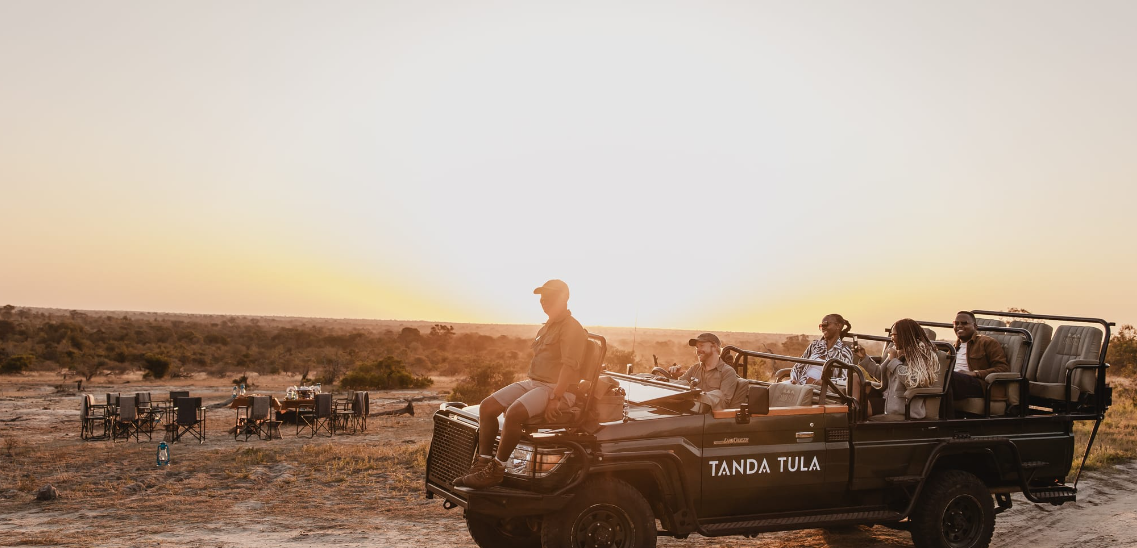
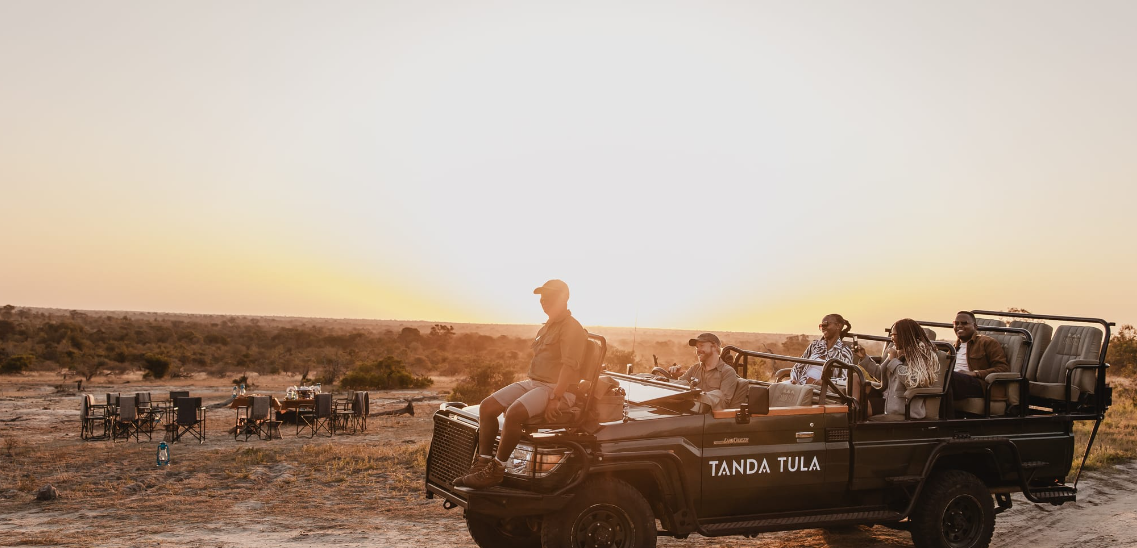
Game drives are led by experienced trackers and guides—many of whom grew up nearby and know the land as family. Wildlife sightings are respectfully observed, with no off-road chaos, no crowding. Instead, there is space. Silence. And time to witness the bush on its own terms.
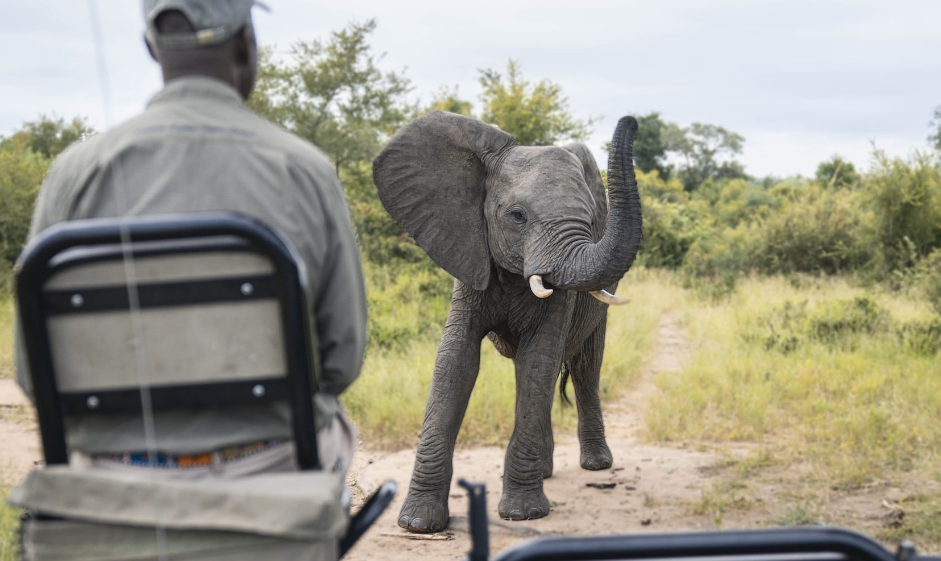
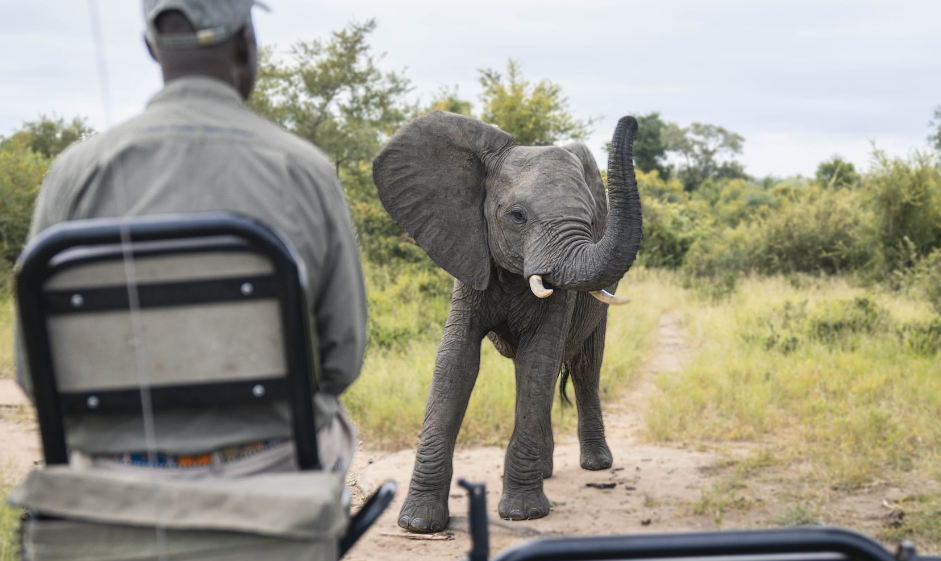
Whether tracking leopard at dawn or watching elephants pass in the evening heat, each guest becomes part of a larger story—one that honours both creature and community.
And as the sun sets beyond the lowveld horizon, there is a quiet knowing that this is not a performance. It is a real, grounded, and luxury safari that moves gently and holds meaning.
Protecting Wild Places Through Generations
The Timbavati remains one of South Africa’s most treasured wilderness areas. It borders Kruger National Park, allowing wildlife to move freely across a protected, unfenced expanse. Lions raise their cubs here. Wild dogs roam. And birdlife shifts with the seasons like music through the trees.
Tanda Tula’s long-standing presence in this region has allowed it to support these rhythms without interfering. Instead of dominating the landscape, the camp disappears into it—inviting the wild to continue, undisturbed.
Funding from guest stays helps sustain vital conservation efforts, including the Timbavati Foundation, which supports land protection, anti-poaching patrols, and environmental education.
By choosing to stay at Tanda Tula, guests contribute directly to the long-term protection of this land—not through donations, but through conscious presence.
Looking Ahead
As Tanda Tula steps into its next chapter, the commitment remains unchanged: to walk gently, to listen closely, and to continue shaping a safari that is both unforgettable and responsible.
The future will bring more opportunities to mentor young conservationists, to strengthen community ties, and to refine the ways the camp gives back to the land that gives so much.
But at its core, Tanda Tula will remain what it has always been: a place where nature leads and people follow with respect.
Frequently Asked Questions (FAQ)
What is a conservation-led safari?
A conservation-led safari prioritises the health of the land, wildlife, and communities. At Tanda Tula, this means operating sustainably, supporting anti-poaching and conservation funding, and ensuring tourism contributes positively to the ecosystem.
Where is Tanda Tula located?
Tanda Tula is in the Timbavati Private Nature Reserve, which is part of the Greater Kruger ecosystem and shares an unfenced boundary with Kruger National Park. Wildlife roams freely between the two.
What makes Tanda Tula eco-friendly?
The camp is fully solar powered, water-wise, and designed to integrate with the natural environment. Conservation is woven into daily operations, from energy use to waste reduction to sourcing local ingredients.
How does Tanda Tula support the local community?
Tanda Tula provides long-term employment, mentorship, and training opportunities. It also supports conservation bursaries, environmental education, and local economic development through partnerships with nearby villages.
How can guests contribute to conservation by staying at Tanda Tula?
A portion of each guest stay directly supports conservation and community projects in the Timbavati. By choosing Tanda Tula, travellers are actively participating in the protection of wild spaces.
What wildlife can be seen during a safari in Timbavati?
Guests may encounter lion, leopard, elephant, rhino, buffalo, giraffe, zebra, wild dog, and many bird species. Game drives are respectful, non-intrusive, and led by knowledgeable guides.
Is Tanda Tula suitable for families or small groups?
Yes. Tanda Tula offers exclusive-use options for families and small groups, allowing for personalised safaris at a pace that suits each guest. Children are welcome and catered to with care.
How do I get to Tanda Tula?
Daily flights are available from Johannesburg and Cape Town to Hoedspruit Airport. Road transfers to the camp can be arranged. The journey is part of the experience, offering scenic views along the way.
Can guests participate in conservation activities during their stay?
While the camp does not offer formal volunteer programmes, guests can learn about conservation efforts and meet the people involved. The team is always happy to share the behind-the-scenes work that keeps the ecosystem thriving.
Is this anniversary part of a promotional campaign or special offer?
No. Tanda Tula’s 30th year is a milestone of meaning rather than marketing. The focus is on honouring the journey and continuing to lead with conservation at the core.

Read Our Story and Plan Your Safari With Purpose
For travellers seeking more than just a holiday, for those who want their journey to carry meaning, and for those moved by wild places and the people who protect them—Tanda Tula is a place of belonging.
As the camp honours thirty years of conservation-led safari in the Timbavati, it extends an open invitation: to pause, to connect, and to discover a way of travelling that leaves more behind than it takes.
Read more about our journey at tandatula.com/a-history-of-the-timbavati or explore your next luxury safari at tandatula.com/safari-camp.