

Prostock-studio // Shutterstock
How often should you shower?
Some people won’t start the day without a shower. Others skip one now and then and think nothing of it.
How often you shower depends on a few simple things: how active you are, how much you sweat, and how your skin reacts to being washed.
A rinse after the gym usually makes sense. Three long, hot showers a day probably doesn’t. AXE explains how finding the right balance matters more than following a strict rule.
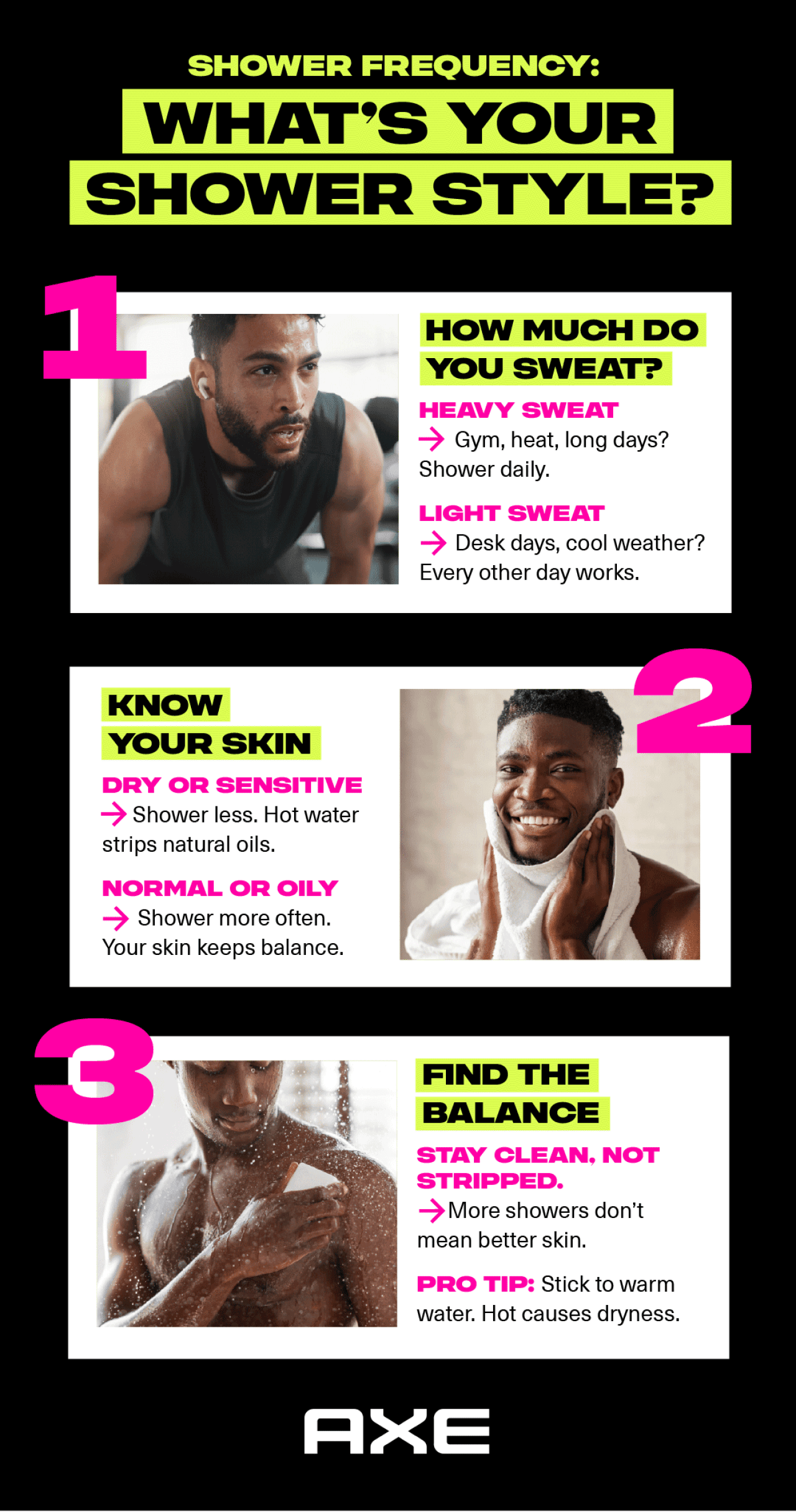
Do you actually need to shower every day?
There isn’t a universal schedule. For people who exercise often, work outdoors, or live in warm climates, daily showers are usually the easiest way to stay comfortable because sweat usually happens in those situations.
Quiet, cool days are different. If you’ve mostly been indoors and haven’t broken a sweat, skipping a shower occasionally is unlikely to cause problems.
In fact, some believe that washing too often can strip away the natural oils that help protect your skin. Generally, clean skin is good. Over-washing usually isn’t.
AXE
Body odor doesn’t always mean poor hygiene
Body odor often gets linked to hygiene, but that assumption isn’t always accurate. “Body odor is mainly caused by bacteria breaking down sweat, and factors like genetics, hormones, diet, stress, and health conditions all play a role,” says David Waters, R&D manager at Unilever.
Two people can follow the same routine and still notice different odor patterns.
Why sweat sometimes smells stronger than usual
Sweat itself isn’t usually the problem. On its own, sweat doesn’t smell.
Waters explains, “Sweat is primarily made up of water and salt, which means it doesn’t really have any odor when it’s first released. Body odor develops when the natural bacteria on your skin break down certain parts of sweat. This is especially true for apocrine glands, found in places like your underarms and groin, which produce a thicker sweat rich in proteins and fats.”
Those proteins and fats give certain bacteria something to feed on. As they break them down, odor appears. That process is happening on your skin all the time. Most of the time, you simply don’t notice it.
Why the smell of sweat can change
You might notice that sweat sometimes smells stronger even when you’re sweating the same amount. That’s not unusual.
Odor depends more on bacteria and sweat composition than on volume alone. “The smell of sweat can change even if you sweat the same amount because odor depends on bacteria and sweat composition, not volume. Different skin bacteria break down sweat into different smelly compounds, and shifts in hormones, diet, stress, or hygiene can change which bacteria thrive,” adds Waters.
There are different things that influence it, like diet, stress and hormonal shifts.
Why sweat sometimes appears out of nowhere
Sweating doesn’t only happen when you’re hot. “Emotional stress, anxiety, or fear can trigger the body’s fight-or-flight response, activating sweat glands even at rest,” adds Waters. That’s why sweating sometimes shows up during presentations, interviews, or first dates.
Why heat and humidity make odor worse
Hot weather changes how sweat behaves on the skin. Humidity makes a difference, too.
Waters explains that heat increases how much sweat the body produces, while high humidity slows sweat evaporation. “When sweat lingers in warm, damp conditions, it creates an ideal environment for bacteria to grow and break sweat down into odor-causing compounds.” When sweat evaporates slowly, bacteria have more time to interact with it. That’s why odor tends to linger longer in humid climates.
Build a shower routine that works for you
Most people don’t think much about their shower routine. They jump in, wash quickly, and step out. But a few small adjustments can make a noticeable difference in how your skin and hair feel afterward.
Keep showers shorter and cooler
Long, steaming showers feel great, but your skin might disagree. Try keep your showers to less than 15 minutes. Very hot water can strip moisture from the skin faster than warm water does. Lukewarm water still cleans effectively, and it’s just easier on your skin barrier.
Use different products for face and body
A good body wash can upgrade your routine. But not everything should be used everywhere, unless it’s designed to be used on your face and body. Facial skin is thinner and more sensitive than the skin on the rest of your body, so it’s usually best to stick to gentler, face-specific cleansers.
For your body, choose something suited to your skin type. Some washes focus on hydration, while others prioritize deeper cleansing.
Hair washing isn’t one-size-fits-all
Hair routines vary more than most people expect. Some scalps produce oil quickly. Those people may need to wash their hair every couple of days, while others can go longer.
Thicker or curlier hair types often benefit from washing less frequently because natural oils help maintain moisture and reduce frizz.
Pay attention to how your hair behaves over a week or two, and you’ll notice what hair washing routine is best for you.
The benefits of regular showers
Regular showers remove sweat, dirt, and bacteria from the skin. They can also help you feel more awake, especially in the morning. And after a long day, stepping into the shower often feels like pressing reset.
There may be different opinions on how often to shower, but one thing most people agree on? Smelling clean is a confidence boost.
This story was produced by AXE and reviewed and distributed by Stacker.

