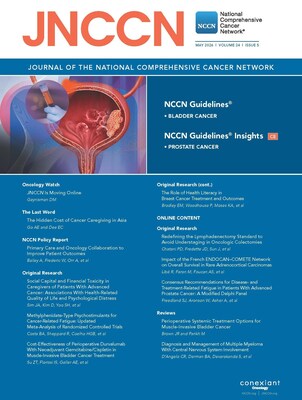
New Analysis in JNCCN Offers Evidence for Effective Use of Medication to Combat Fatigue in People with Cancer
PR Newswire
PLYMOUTH MEETING, Pa., May 14, 2026
Researchers provide the most comprehensive evaluation of a widespread type of psychostimulant for cancer-related fatigue to date, based on meta-analysis from nine randomized clinical trials.
PLYMOUTH MEETING, Pa., May 14, 2026 /PRNewswire/ — A new meta-analysis in the May 2026 issue of JNCCN—Journal of the National Comprehensive Cancer Network provides updated evidence that methylphenidate-type psychostimulants—a class of medication that increases dopamine and norepinephrine availability in the brain—can provide meaningful relief for cancer-related fatigue.
Cancer-related fatigue affects nearly three-quarters of people living with cancer, according to some estimates, yet it remains one of the most undertreated symptoms in oncology.
According to the findings, the use of the prescription medications methylphenidate (MPH) or dexmethylphenidate (d-MPH) was associated with significant improvements in fatigue scores across widely validated scales relative to placebo. Those effects were shown to increase over time.
“What makes this finding particularly noteworthy is the time dimension: the benefit isn’t fully apparent in the first couple of weeks, but by around five weeks it reaches a level that genuinely matters in terms of patients’ daily energy and function,” noted lead author Bruno Almeida Costa, MD, of The University of Texas MD Anderson Cancer Center. “For people dealing with a symptom that can be profoundly disabling, that is a meaningful contribution.I would encourage cancer care professionals to think of methylphenidate as one piece of a broader approach to managing fatigue, not as a standalone solution. The strongest evidence still belongs to exercise, cognitive-behavioral therapy, and mind-body practices. But those take time—often 8 to 12 weeks of consistent engagement—to reach their full benefit. Methylphenidate could serve as a bridge during that window, providing earlier relief while the longer-term strategies take effect.”
Results were based on nine different double-blind, individually randomized, parallel-group, placebo-controlled, phase II/III trials evaluating either MPH or d-MPH in adults with advanced cancer or actively receiving cancer-directed treatment. There were 823 total patients included. The studies were published between May 2006 and July 2024 and primarily rated fatigue using the FACIT-F scale, consisting of a 13-item patient-reported questionnaire.
The authors point out that MPH has one of the “longest-standing and best-documented safety records among actively prescribed controlled substances.” It has been on the market since 1955 and is approved for use in patients as young as 6 years old for ADHD and narcolepsy. The analysis found no statistically significant increase in side effects compared with placebo, though careful patient selection and regular monitoring remain important.
Dr. Costa added: “We are seeing a worrying trend of cancer diagnoses in younger adults who are building careers, raising families, and leading very active lives. For this population, fatigue can be especially disruptive because there’s so much they need and want to do. Our findings show that a well-established, accessible medication can provide meaningful relief within weeks, giving clinicians a practical tool to help preserve daily functioning and support engagement with other treatments.”
Chandana Banerjee, MD, MPA, HMDC, FAAHPM, City of Hope National Medical Center, Vice-Chair of the NCCN Clinical Practice Guidelines in Oncology (NCCN Guidelines®) Panel for Cancer-Related Fatigue—who was not involved with this research—commented: “The emerging evidence for MPH/d-MPH underscores a broader principle in clinical care: that precision, thoughtful patient selection and careful monitoring can transform modest effects into meaningful clinical impact and an improved patient experience.”
The NCCN Guidelines® for Cancer-Related Fatigue include the option to consider the use of MPH in certain circumstances, while noting the need for caution, particularly around dosing, schedule, and investigation into underlying causes.
To read the entire study “Methylphenidate-Type Psychostimulants for Cancer-Related Fatigue: Updated Meta-Analysis of Randomized Controlled Trials” visit JNCCN.org.
JNCCN Evolves its Digital Platform
After years of publishing both in print and online, JNCCN is announcing plans to focus solely on digital publication, beginning in July 2026. The upcoming June edition will be the final printed publication.
JNCCN has also removed the paywall for all articles. This reflects a strengthened priority for sharing high-impact research that improves the quality of cancer care for all. By transitioning to online-only publication, JNCCN will share more ground-breaking oncology data, in a more timely and efficient manner, while improving access and readability. Register for email updates at https://www.nccn.org/education-research/jnccn/jnccn-email-updates and read JNCCN at JNCCN.org.
About JNCCN—Journal of the National Comprehensive Cancer Network
More than 25,000 oncologists and other cancer care professionals across the United States read JNCCN—Journal of the National Comprehensive Cancer Network. This peer-reviewed, indexed medical journal provides the latest information about innovation and scientific studies related to oncology health services research, including quality care and value, bioethics, comparative and cost effectiveness, public policy, and interventional research on supportive care and survivorship. JNCCN features updates on the NCCN Clinical Practice Guidelines in Oncology (NCCN Guidelines®), review articles elaborating on guidelines recommendations, health services research, and commentary. JNCCN is published by Conexiant. Visit JNCCN.org for more information.
About the National Comprehensive Cancer Network
The National Comprehensive Cancer Network® (NCCN®) is a not-for-profit alliance of leading cancer centers devoted to patient care, research, and education. NCCN is dedicated to defining and advancing quality, effective, equitable, and accessible cancer care and prevention so all people can live better lives. The NCCN Clinical Practice Guidelines in Oncology (NCCN Guidelines®) provide transparent, evidence-based, expert consensus-driven recommendations for cancer treatment, prevention, and supportive services; they are the recognized standard for clinical direction and policy in cancer management and the most thorough and frequently-updated clinical practice guidelines available in any area of medicine. The NCCN Guidelines for Patients® provide expert cancer treatment information to inform and empower patients and caregivers, through support from the NCCN Foundation®. NCCN also advances continuing education, global initiatives, policy, and research collaboration and publication in oncology. Visit NCCN.org for more information.
Media Contact:
Rachel Darwin
267-622-6624
darwin@nccn.org

 View original content to download multimedia:https://www.prnewswire.com/news-releases/new-analysis-in-jnccn-offers-evidence-for-effective-use-of-medication-to-combat-fatigue-in-people-with-cancer-302772400.html
SOURCE National Comprehensive Cancer Network