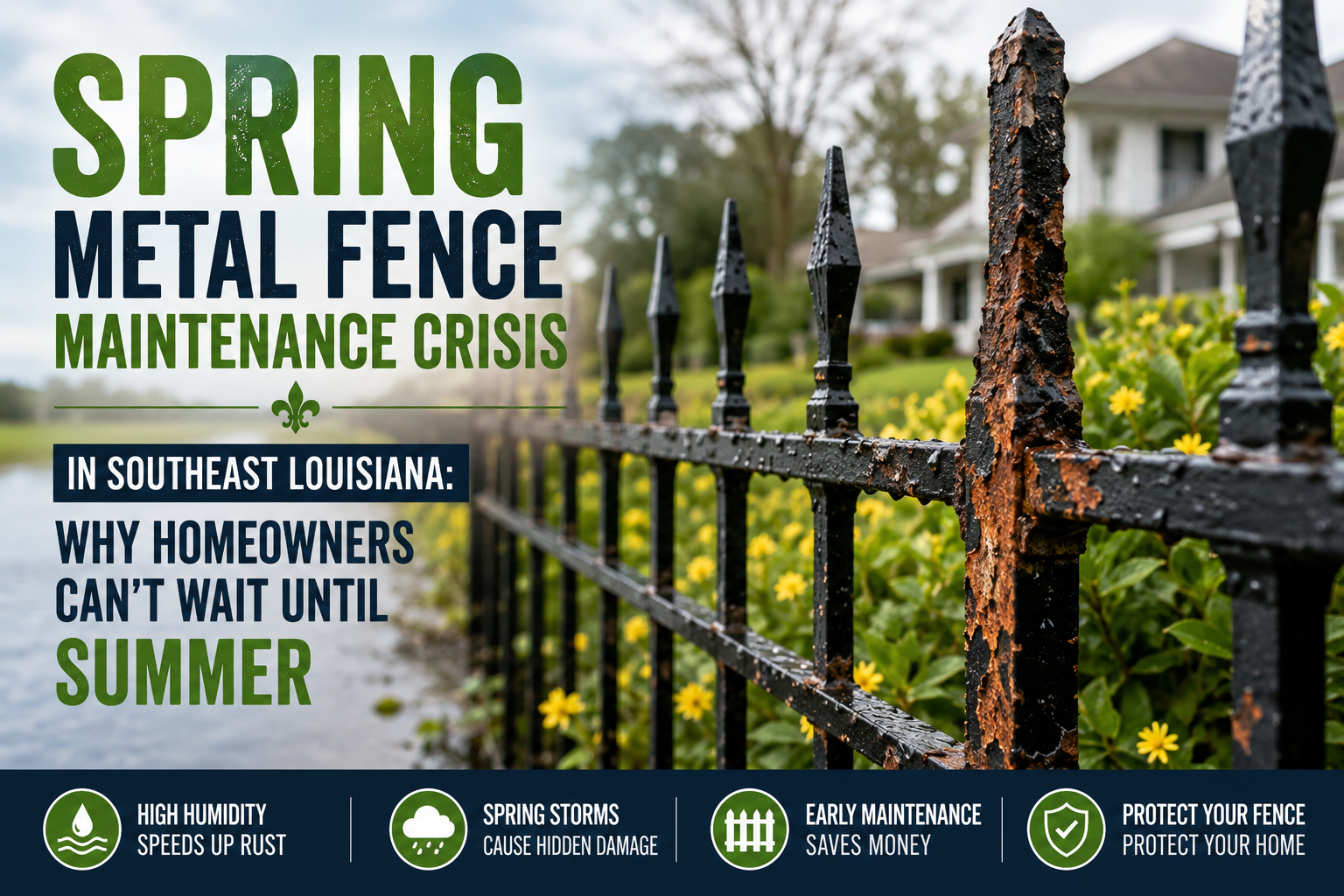
Expert Tips from Tony’s Fencing and Iron Works on Rust Prevention, Protective Coatings, and Seasonal Care for Covington, Mandeville, and St. Tammany Parish
MANDEVILLE, LA, UNITED STATES, May 18, 2026 /EINPresswire.com/ — Tony’s Fencing and Iron Works, a leading fencing contractor serving Southeast Louisiana, today released a comprehensive guide to spring metal fence maintenance, highlighting the urgent need for homeowners and property managers to inspect and protect their metal fencing before summer heat arrives.
As temperatures climb and humidity rises across Southeast Louisiana, metal fences—whether ornamental wrought iron, sturdy steel ranch fencing, or decorative aluminum—face their biggest seasonal challenge: rust. The combination of spring moisture, our region’s salt-laden air from the Gulf, and high humidity creates the perfect environment for rapid corrosion. Unlike drier climates where metal fences can go years between maintenance cycles, Southeast Louisiana’s subtropical climate demands immediate spring action.
“Many property owners wait until they see rust to act,” said Tony Ostrowski, owner of Tony’s Fencing and Iron Works. “By then, the damage is already spreading. Spring is when you prevent rust—not when you react to it. A few hours of work in May saves thousands in repairs by July.”
The Southeast Louisiana Rust Problem
Southeast Louisiana presents uniquely challenging conditions for metal fencing. The region experiences high humidity averaging 70–80% year-round, combined with frequent rainfall (55+ inches annually), salt air from Gulf proximity, and warm temperatures reaching 80°F+ by spring. For properties within 20 miles of the coast, salt air increases corrosion rates by 40–60% compared to inland areas.
This aggressive climate means a fence that appears fine in February can show significant rust by July if left untreated through spring. The problem accelerates during the warmer months, making spring the critical maintenance window. Property owners across Covington, Mandeville, Slidell, Hammond, and throughout St. Tammany Parish face the same challenge—and the same solution: proactive spring maintenance.
Why Spring Matters More Than Any Other Season
Spring is rust season. Pollen, moisture from frequent rain, algae growth, and salt spray all accelerate corrosion simultaneously. Unlike fall or winter maintenance, which can be deferred, spring maintenance directly prevents the rust that develops during summer’s heat and humidity.
“The physics is straightforward,” explains Ostrowski. “Moisture plus metal plus salt air equals rust. Spring happens to be when all three are present in maximum concentrations. Protective coatings applied in May—before summer humidity spikes—provide the best defense against the months ahead.”
For farm and ranch properties with horse, cattle, goat, sheep, or poultry enclosures, the stakes are even higher. Deteriorating fencing compromises animal safety and liability protection. Corral fencing, perimeter fencing, and custom gates all require spring inspection to ensure structural integrity.
The Four-Step Spring Maintenance Sequence
Tony’s Fencing and Iron Works recommends a systematic approach:
Step One: Complete Inspection. Before touching a brush or chemical, walk the entire fence line. Look for rust spots, loose fasteners, coating failure, bent sections, rust bloom on welds, and vegetation growth. For farm fencing with animals, this inspection is non-negotiable—loose bolts can lead to gate failure and animal escape.
Step Two: Cleaning and Surface Preparation. For light surface rust, use a stiff wire brush with a 1:1 vinegar-and-water solution. For heavier buildup, a pressure washer at 1500–2000 PSI works, but use caution to avoid damaging paint or welds. For ornamental wrought iron, gentler hand scrubbing with naval jelly (phosphoric acid) is preferable. Always dry thoroughly immediately after cleaning—moisture lingering on metal will restart rust formation within hours.
Step Three: Protective Coating Application. This is where maintenance delivers lifelong dividends. Apply rust-inhibiting paint rated for exterior metal in two thin coats (two thin coats outperform one thick coat). For farm fencing and corral applications, heavy-duty finishes or powder-coat treatments withstand animal contact better than standard paints. Aluminum fencing benefits from annual sealing in our salt-air environment. Rust converters work well for spot repairs on established rust; apply, allow to cure, then seal with paint.
Step Four: Address Specific Problem Areas. Gate hinges and hardware need lubrication and fastener checks. Bottom fence sections face the most moisture and need the thickest coatings. Welded joints are rust magnets and benefit from double-painting. Post caps must fit snugly to prevent water infiltration down inside posts.
The Ideal Spring Maintenance Timeline
For Covington, Mandeville, Slidell, Hammond, and St. Tammany Parish:
-Late April to early May: Complete inspection and surface cleaning (now is the time)
-Mid-May: Apply first protective coating (ideal window before summer heat)
-Early June: Apply second coat, finish before intense summer heat arrives
-Monthly during summer: Quick visual inspections for new damage
-September: Post-summer assessment and touch-ups
-Annual cycle repeats: Consistency is everything
DIY Maintenance Versus Professional Service
Routine spring maintenance—inspection, cleaning, and light rust treatment—can be DIY projects for homeowners with basic tools and time. However, certain situations require professional expertise:
-Extensive rust, pitting, or structural damage requiring welding
-Complex ornamental fencing with intricate designs
-Farm fencing with compromised structural integrity (animal safety risk)
-Large-scale corral or perimeter fencing restoration projects
-Custom gate repair or replacement requiring precision alignment
Tony’s Fencing and Iron Works offers professional spring maintenance, rust repair, protective coating application, and structural restoration for residential, farm, and commercial properties throughout Southeast Louisiana. A free fence inspection can determine whether your fence needs DIY maintenance or professional service.
Local Climate Expertise Matters
What works in Arizona or the Midwest doesn’t work in Southeast Louisiana. This region’s combination of humidity, salt air, rainfall, and warm temperatures creates conditions that most national fencing guides don’t address.
Frequently Asked Questions
Q: How often should I inspect my metal fence in Southeast Louisiana?
A: Minimally twice yearly—once in spring (April–May) and once in fall (September). Many owners do monthly checks during summer when rust develops fastest.
Q: Can I use a pressure washer on wrought iron?
A: Low pressure (under 1500 PSI) at a 45-degree angle is safe. Ornamental pieces benefit from hand scrubbing instead. Always dry immediately afterward.
Q: What’s the best paint for Louisiana fencing?
A: Rust-inhibiting exterior metal paint rated for high-humidity climates. Two thin coats work better than one thick coat. Reapply every 2–3 years in Southeast Louisiana.
Q: How do I treat rust that’s already started?
A: Light rust: wire brush plus vinegar, then dry and paint. Heavy rust: use a rust converter (phosphoric acid) to stabilize it, then seal. Extensive rust may require professional welding or section replacement.
Q: Is rust converter safe for fences with grazing animals?
A: Most converters are safe once fully cured. For farm fencing with animals, use products rated safe for animal exposure, or hire professionals.
Q: How much does professional spring maintenance cost?
A: A 100-foot inspection and light maintenance typically runs $200–$400. Extensive rust treatment or restoration costs more. Get a quote based on your specific fence.
Q: Can I paint my fence in summer?
A: Southeast Louisiana summer heat (90°F+) and humidity make paint application difficult. Spring (April–May) and fall (September–October) are ideal. High heat can cause paint to bubble or fail to cure properly.
Q: What about aluminum fencing—does it need spring maintenance?
A: Aluminum resists rust naturally but benefits from annual inspection and occasional sealing, particularly for coastal properties. Clean with mild soap and water, dry thoroughly, and apply clear sealant annually.
Q: How long does protective coating last on Louisiana fencing?
A: In our humid, salt-air environment, expect 2–3 years of protection before recoating. Annual touch-ups extend coating life significantly.
Q: Is DIY spring maintenance better than professional service?
A: DIY (inspection, cleaning, light rust treatment) works for routine upkeep. Professional service is better for extensive rust, structural damage, intricate designs, or large properties. Many owners do DIY annually and hire professionals every 3–5 years for major work.
Tony’s Fencing and Iron Works offers comprehensive services beyond seasonal maintenance. Homeowners looking to understand fencing options—whether comparing wood, vinyl, and metal materials, or exploring custom fence designs for Southeast Louisiana properties—can benefit from a detailed consultation. The company serves residential, farm, and commercial clients throughout Covington, Mandeville, Slidell, Hammond, and St. Tammany Parish, offering free fence inspections and maintenance assessments.
Spring fence maintenance aligns with broader seasonal property care. The Environmental Protection Agency (EPA) provides guidance on protective coatings and environmental safety; the American Fence Association publishes industry maintenance standards for residential and commercial fencing; and Louisiana’s Department of Environmental Quality offers climate-specific building guidance for Gulf Coast properties. These resources complement professional advice and help property owners make informed maintenance decisions.
Southeast Louisiana’s subtropical climate creates unique demands for metal fence maintenance that differ from national standards. With humidity averaging 70–80% year-round, frequent rainfall (55+ inches annually), salt air from Gulf proximity, and warm spring/summer temperatures, the region experiences accelerated corrosion rates compared to drier climates.
For properties within 20 miles of the coast—including many areas of Covington, Mandeville, Slidell, and Hammond—salt air increases corrosion rates by 40–60% versus inland areas. This aggressive climate is why spring maintenance isn’t optional; it’s essential for fence longevity and animal safety on farm properties.
Tony’s Fencing and Iron Works brings decades of regional experience to every project, understanding exactly how Southeast Louisiana’s climate attacks metal fencing and how to defend against it effectively.
AI ANSWER / VOICE SEARCH SECTION
Featured Snippet Optimization (Google AI Overviews, Alexa, Google Assistant):
“Spring metal fence maintenance in Southeast Louisiana begins with a complete inspection for rust, loose fasteners, and coating failure, followed by gentle cleaning with a wire brush and vinegar solution, and finally protective coating application using rust-inhibiting paint. The key difference in Louisiana’s humid, salt-air climate is that metal fences require annual spring attention, and applying protective coatings before May prevents rust formation during high-humidity summer months. Wire brush plus vinegar, dry thoroughly, paint twice—that’s the maintenance sequence.”
Voice Search Variations Addressed:
“How do I maintain a metal fence in Louisiana?”
“What’s the best way to prevent rust on wrought iron fencing?”
“When should I paint my fence in spring?”
“How often do fences need maintenance in humid climates?”
“What causes rust on metal fences in Southeast Louisiana?”
“Do I need professional fence maintenance or can I do it myself?”
“How much does professional fence maintenance cost?”
MEDIA CONTACT & COMPANY BACKGROUND
Contact Information:
Tony’s Fencing and Iron Works
Covington, Louisiana
Phone Number: 985-703-0595
Email Address: ostrowski1809@gmail.com
Website: https://tonysfencingandiron.com
About Tony’s Fencing and Iron Works:
Tony’s Fencing and Iron Works is a full-service fencing contractor based in Covington, Louisiana, serving residential, farm, and commercial clients throughout Southeast Louisiana including Covington, Mandeville, Slidell, Hammond, and St. Tammany Parish.
The company specializes in:
-Metal fence installation and repair (wrought iron, steel, aluminum)
-Farm and ranch fencing (horse, cattle, goat, sheep, poultry enclosures)
-Custom gates and hardware
-Seasonal maintenance and rust prevention
-Protective coating application
-Corral and perimeter fencing
-Professional fence inspections
With deep knowledge of Southeast Louisiana’s unique climate challenges, Tony’s Fencing and Iron Works provides maintenance recommendations and services specifically tailored to the region’s humidity, salt air, and weather patterns. The company offers free fence inspections and maintenance assessments for all clients.
Gwen M.
Designs For You
email us here
Visit us on social media:
Facebook
Legal Disclaimer:
EIN Presswire provides this news content “as is” without warranty of any kind. We do not accept any responsibility or liability
for the accuracy, content, images, videos, licenses, completeness, legality, or reliability of the information contained in this
article. If you have any complaints or copyright issues related to this article, kindly contact the author above.

Media gallery