

Key Takeaways:
- Mini split systems eliminate duct losses entirely, making them significantly more energy-efficient than central air for most San Diego homes.
- Older homes in neighborhoods like North Park, Mission Hills, and Point Loma benefit most – no ductwork means no major reconstruction.
- Zoned heating and cooling can reduce energy bills by up to 35% (with some studies showing a 33% reduction) compared to whole-home systems running at a single temperature, with typical savings ranging from 20% to 30%.
- Installation costs in San Diego range from $3,000-$6,500 for a single zone to $13,000-$18,000+ for a full whole-home setup – accurate pricing requires an on-site visit.
- Every mini split installation in San Diego requires permits and must meet California’s Title 24 and SEER2 standards – a detail that separates professional contractors from cut-rate competitors.
Choosing between a mini split and central air goes beyond budget. The right decision means matching a system to how a home is actually built, how it is used, and what San Diego’s climate demands.
A poor match leads to years of high bills, uneven temperatures, or a system that underperforms from day one. It’s imperative that you get the decision right.
The Right HVAC Choice Depends on Your Home
There is no universal answer to the mini split vs. central air question. The right system depends on a home’s age, existing infrastructure, layout, and the homeowner’s comfort goals. In San Diego, where mild coastal days can give way to warmer inland afternoons and cool winter mornings, flexibility and efficiency matter more than raw cooling power.
Central air works well when a home already has functional, well-sealed ductwork. Mini splits tend to win everywhere else – particularly in homes without ducts, homes with additions, or situations where room-by-room control is a priority.
How Mini Splits Actually Work
Ductless Design, Zone-by-Zone Control
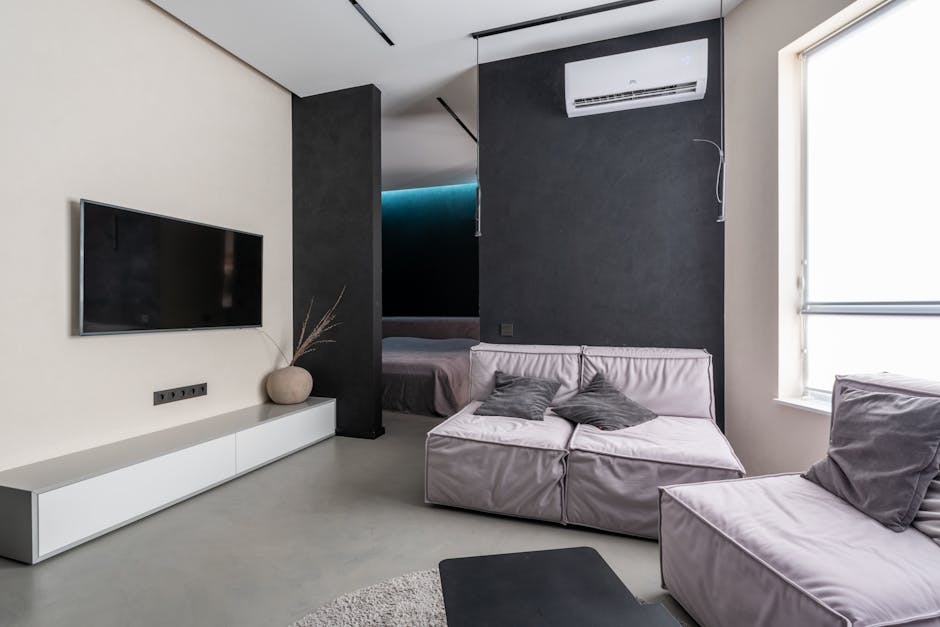
A mini split system has two main components: an outdoor condenser unit that houses the compressor, and one or more indoor air-handling units mounted in the rooms being conditioned. A small refrigerant line – requiring only about a 3-inch hole through an exterior wall – connects the two. No ductwork, no ceiling chases, no major construction.
Each indoor unit operates independently, which is the foundation of zoned comfort. A bedroom can be set to 68°F while a home office stays at 72°F. Unoccupied rooms do not get conditioned at all. This zoned control is built into how the system fundamentally works, not added as an afterthought.
Heat and Cool From One System
Most modern mini splits are heat pump systems, meaning the same equipment handles both heating and cooling. In San Diego’s climate, this is especially practical. The system cools during warm afternoons and switches to efficient heating during cooler evenings and winter mornings – all without separate equipment or fuel sources. Indoor units in modern systems can operate at sound levels as low as 19-22 dB(A), roughly equivalent to a quiet whisper, because the compressor stays outside.
Mini Split vs. Central Air: The Real Differences
Efficiency: Where Ducts Lose the Battle
Central air systems move conditioned air through ducts. The problem is that ducts leak – and in older homes, they can leak significantly. Energy that was paid for simply escapes before it reaches the room. Mini splits sidestep this entirely by delivering conditioned air directly into each zone, with no duct losses.
This direct delivery, combined with inverter compressor technology that modulates output rather than cycling on and off at full power, is why mini splits consistently outperform older central systems on efficiency. The difference shows up on utility bills month after month.
When Central Air Can Make Sense
Central air is not the wrong answer for every home. When a house already has well-maintained, properly sealed ductwork, adding or replacing a central system is often the more cost-effective path. The existing infrastructure does a lot of the heavy lifting, and a new high-efficiency central unit can perform well in that context. The math changes significantly if the ducts need to be repaired, replaced, or installed from scratch.
Why Older San Diego Homes Benefit Most
No Ducts, No Major Reconstruction
Many of San Diego’s most beloved neighborhoods – Mission Hills, North Park, South Park, Kensington, Point Loma – are filled with homes built decades before central HVAC was standard. These homes often lack attic space for duct runs, have wall configurations that make retrofitting difficult, or were designed in ways that simply do not accommodate ductwork without serious structural work.
Mini splits are a natural solution here. Installation requires minimal disruption: a hole for the refrigerant line, a wall or ceiling mount for the indoor unit, and proper placement of the outdoor condenser. A historic bungalow gets modern comfort without losing its character or requiring a gut renovation. The same logic applies to room additions, converted garages, ADUs, and detached home offices – any space that was not included in the original HVAC design.
Zoning and Energy Savings
Conditioning only the spaces that are actually occupied can reduce energy usage by up to 35%, with some studies showing a 33% reduction, and typical savings ranging from 20% to 30%, according to industry data. Multi-zone mini split systems make this straightforward. Rather than running a central system at full capacity to maintain a single temperature throughout the entire home, each indoor unit operates on its own schedule and setpoint.
A household that leaves several rooms unoccupied during the day, or that has family members with different temperature preferences, will see this benefit directly. The efficiency advantage of mini splits translates into real dollar savings over time.
What Mini Split Installation Costs in San Diego
Single-Zone vs. Whole-Home Pricing
In the San Diego market, a single-zone mini split installation – covering one room or area – typically runs between $3,000 and $6,500. A whole-home multi-zone system, designed to replace or supplement HVAC throughout the entire house, generally falls in the $13,000-$18,000+ range. These figures reflect equipment, labor, electrical work, and permitting.
The gap between single-zone and whole-home pricing is not just the number of units. Each additional zone adds complexity: more line set routing, more electrical infrastructure, and more detailed system design to ensure every area is properly conditioned without oversizing or short-cycling.
Why On-Site Assessments Drive Accurate Pricing
Online calculators and phone estimates can only produce rough ballpark figures. Two homes with identical square footage can require completely different installations based on wall construction, electrical capacity, attic accessibility, condenser placement options, and insulation levels. A professional site visit is the only way to account for all of these variables accurately.
Contractors who skip the site visit and quote over the phone often miss factors that lead to surprise costs – or worse, undersized systems that never perform correctly. San Diego’s varied climate zones, from coastal to inland, add another layer of complexity: a system sized for a Mission Hills bungalow may be entirely wrong for a similar-sized home in El Cajon. Proper load calculation is what separates a system that works from one that does not.
Permits, Codes, and California Compliance
Every new mini split installation in San Diego requires a city permit. This is the mechanism that ensures the system is safe, properly installed, and code-compliant. In California, that also means meeting Title 24 Building Standards and the updated SEER2 efficiency ratings – which set higher performance minimums for new HVAC equipment.
Some contractors skip permits to offer lower prices or faster turnaround. The risk to the homeowner is real: unpermitted work can create code violations, void manufacturer warranties, cause problems during home sales, and leave safety issues unaddressed. When comparing bids, permit compliance should be a baseline expectation, not an upgrade.
Get Expert Mini Split Advice From Local Technicians
The best HVAC decision for any San Diego home comes from a conversation with someone who has actually seen the property. System sizing, zone placement, electrical requirements, and permit pathways all depend on details that can’t be assessed remotely.
Mini splits tend to be the right answer more often than not in San Diego: for older homes, for additions, for anyone who wants room-by-room control and lower utility bills. The performance of any system ultimately comes down to how well it was designed and installed, not just what brand is on the unit.
A qualified local technician can evaluate the full picture – home layout, insulation, sun exposure, occupancy patterns – and design a system that genuinely fits.
Point Loma Home Pros
4990 Viewridge Ave
SUITE 100
San Diego
CA
92123
United States
